
Whizzinator Review: Critical Limitations Exposed
If you’re staring down a drug test with a job, your freedom, or your family’s stability on the line, the panic is real. You’re probably searching for any guaranteed solution, and you’ve likely come across a product called the Whizzinator. It’s a name that pops up in frantic online searches, promising a way to submit a clean sample no matter what.
So, what is a Whizzinator? In simple terms, it’s a synthetic urine delivery system designed to mimic the natural process. The original Whizzinator and its updated version, the Whizzinator 5000, are built with a lifelike prosthetic, a reservoir for the fake urine, and a heating system to get the temperature right. The core idea is to give you a toxin-free sample that checks all the boxes for a lab.
The main goal here is to help you avoid a positive result that could cost you everything. But here’s the critical question you need to answer first: Is this complex device the right tool for your specific situation, or is it overkill? Because the type of test you’re facing changes everything.
Identifying Your Drug Test Scenario: Supervised, Unsupervised, and Key Constraints
So the first, and most critical, step is to identify the exact type of test you’re facing. This isn’t just a minor detail—it’s the entire foundation for whether a device like the Whizzinator is a viable option or a guaranteed path to failure. Truly understanding how do you pass a urine drug test starts with recognizing that the rules of the room change everything.
Let’s break down the three main scenarios you could encounter.
Unsupervised Tests: The Common Scenario
This is the most frequent type for pre-employment screenings and standard workplace checks. Here, you enter a private restroom alone. The door might be left slightly ajar, but no one is watching you urinate. The primary constraint is the physical search beforehand—you’ll likely need to empty your pockets and remove outer layers like jackets. The key advantage is privacy. Many whizzinator reviews highlight success in these “pee test” scenarios precisely because you can use the device without direct observation. The main battle here is managing the temperature and avoiding suspicious noises.
Directly Supervised (Observed) Tests: The High-Risk Scenario
This is common for probation, parole, return-to-duty cases, and some federal (DOT) tests. A same-gender observer must visually watch the urine leave your body and enter the cup. The constraints are severe. You’ll undergo a 360-degree inspection, raising your shirt and lowering your pants to show you have no devices strapped to your body. This is where whizzinator reviews for probation often turn negative. The prosthetic is designed to be seen, and in this setting, that’s exactly what gets you caught. Detection is treated as a “refusal to test,” which carries the same weight as a positive result—meaning jail time or job loss.
Indirectly Supervised / Monitored Tests: The Gray Area
Here, a collector stays in the restroom but doesn’t directly watch the stream. They listen for sounds and may inspect the sample immediately after. This can be the standard procedure or triggered by suspicion—like a sample with an odd temperature, color, or odor. This creates a stressful middle ground. While you have a moment of privacy, any noise from a bottle cap or an unnatural pour could escalate the situation to a directly observed collection.
The bottom line is this: your test type dictates your strategy. For the millions facing a standard, unsupervised pre-employment test, the core question becomes: if no one is watching the stream, do you really need a complex prosthetic designed to be seen? That’s a lot of overhead—and potential failure points—for a situation that only requires a discreet, quiet, and temperature-perfect sample.
Decision Guide: Matching Your Test Type to the Best Strategy
So the key to choosing the right tool is matching it directly to your specific test scenario. Using a complex prosthetic for a simple, unsupervised test is like bringing a fire hose to water a houseplant—it’s overkill that introduces unnecessary risk. Let’s break down your exact situation.
Here’s a direct decision guide. Find your test type below, and you’ll see the clear, logical path forward.
| If your test is… | The Risk Level is… | Your Best Approach |
|---|---|---|
| Unsupervised (Pre-employment) | Low | Discreet Belt or Bottle: A slim, pre-filled belt (like the Incognito Belt) or a small 2–3 oz bottle tucked into your underwear is the simplest, most reliable solution. A bulky prosthetic like the Whizzinator is unnecessary here. It increases your risk of being spotted during routine pocket checks or when you’re asked to remove outer clothing. |
| Indirectly Supervised (Medical/Standard) | Moderate | Discreet Wearable Belt: A gravity-fed belt is your best bet. It maintains a perfect 90–100°F temperature using your body heat and a small pad, all while lying flat and undetectable under your clothes. The Whizzinator is considered high-risk/low-necessity in this scenario because the collector isn’t directly watching the urine stream—they’re just listening from outside the stall. |
| Directly Supervised (Probation/Court/DOT) | High | Prosthetic (Whizzinator) or Detox: This is the only scenario where a prosthetic might be considered. If a same-gender observer is required to watch the urine leave your body, a device that mimics anatomy becomes an option—though it carries significant risk during the mandatory 360-degree clothing check. A non-device alternative is a high-quality detox drink to temporarily flush metabolites. |
| Random / On-site | Extreme | Pre-mixed Bottle or Belt: You need something you can wear comfortably and discreetly all day, every day. The Whizzinator’s bulk makes it impractical for constant, random readiness. A slim belt or a tiny bottle with a reliable heat activator is far more practical for immediate, on-the-spot use. |
The core logic is simple: for the vast majority of tests—especially the common, unsupervised pre-employment screen—the Whizzinator’s design solves a problem you don’t have. Its size and complexity are differentiators meant for a very specific, high-observation scenario. Leveraging it elsewhere just churns up your risk profile.
For example, consider the standard pre-employment protocol. You’ll likely need to empty your pockets and remove a jacket. A flat belt or a small bottle hidden in your waistband is virtually invisible during this check. The Whizzinator’s prosthetic and tubing, however, create a noticeable profile that could raise questions during a pat-down or visual inspection.
The good news is that modern alternatives are engineered for the most common scenarios. They focus on the two things that actually matter for an unsupervised test: maintaining the correct temperature for over an hour and passing a lab’s specimen validity testing (SVT) by including key compounds like uric acid and creatinine. That’s the differentiator that provides real peace of mind.
So, identify your test type from the table. That single piece of information immediately narrows your strategy and points you toward the most effective, low-stress solution for your exact situation.
Risks and Failures: Why the Whizzinator May Not Be Reliable
So you’ve identified your test as unsupervised. That’s a crucial piece of information. However, don’t mistake “unsupervised” for “risk-free.” The Whizzinator introduces a specific set of failure points that have nothing to do with someone watching you. These risks stem from the product’s fundamental design and the advanced technology of modern labs.
The Temperature Trap
This is the single most common reason for a failed test, and it’s a constant source of anxiety. The collector has a strict 4-minute window to verify your sample is between 90–100°F.
- Overheating is a giant red flag. Using a hand warmer or microwaving the pouch for too long can push the temperature above 100°F. To a lab, this is an immediate “reason to believe” you’ve tampered with the sample. It’s not a minor mistake; it’s a direct signal of fraud.
- Underheating is just as damning. Relying on body heat alone is a gamble. A cold waiting room, a long delay, or simply not having the device positioned correctly can cause the synthetic urine to cool below 90°F before it’s even poured. A cold sample is an automatic fail.
The emotional cost here is real. You’re not just worried about the test; you’re constantly calculating, “Is it still warm enough? Did I overdo it?” That stress can make you fumble, and fumbling draws attention.
The Lab Detection Risk: It’s Not 2005 Anymore
If the temperature is perfect, you then face the lab itself. Modern Specimen Validity Testing (SVT) is designed to catch synthetic urine.
- They check for what’s missing. Labs test for specific human biomarkers like creatinine, uric acid, and urea. Many synthetic formulas lack these, making the sample easy to flag as non-human.
- Advanced tech sees everything. Techniques like liquid chromatography-mass spectrometry (LC-MS) can detect the absence of common human metabolites—things like caffeine or nicotine byproducts. If your sample is “too clean,” it’s suspicious.
- The “eye test” still matters. A collector might note that the urine lacks a natural smell, doesn’t foam when poured, or looks unusually clear. This visual cue alone can trigger a more rigorous secondary test.
For a deeper dive into how labs identify fake samples, you can review the mechanics of synthetic urine testing. The point is, a cheap formula is a massive liability.
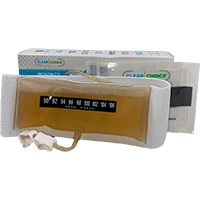
- All you need to pass your test in one kit.
- It will pass specimen validity tests.
- Labs cannot tell that it’s synthetic.
- Invisible under clothes.
- Maintains perfect temperature.
Operational Failures: The Devil in the Details
Even if you beat the temperature and the lab, the device itself can betray you.
- Suspicious noises. The pinch valve can make an unnatural clicking sound in a quiet restroom. The sloshing of liquid in the pouch can be audible.
- Physical evidence. A leak from a loose connection can leave a wet spot or a chemical odor on your clothing. The bulk of the prosthetic and belt can create a visible outline under your pants—a telltale sign called “printing.”
- Your own anxiety. Fidgeting, excessive sweating, or fumbling in your pocket can alert a collector. Their protocol often allows them to switch to a “direct observation” test on the spot if you seem overly nervous.
The Consequences Aren’t Just a “Fail”
Let’s be clear about what’s at stake. This isn’t like failing a quiz.
- Legal trouble. In at least 18 states, using synthetic urine to defraud a test is a specific crime, potentially a felony.
- Career suicide. For jobs regulated by the DOT, a substituted sample is treated as a “refusal to test,” which gets you flagged in a national database and likely blacklisted from your industry.
- Probation revocation. If you’re on probation, getting caught almost always means an immediate revocation hearing and likely jail time.
The core issue is that the Whizzinator adds layers of complexity—mechanical, biological, and psychological—to an already high-stakes situation. Each layer is another potential point of failure. This isn’t about minor hiccups; these are deal-breakers that can lead directly to lost jobs, legal fees, or time behind bars. The anxiety of managing all these variables is its own significant burden.
This inherent unreliability, baked into the product’s design, naturally leads to a critical question: what’s actually inside this kit that creates so many potential problems? Understanding the components themselves reveals why these failure points exist in the first place.
Inside the Whizzinator Kit: Why Its Components Fall Short
So the key to understanding the Whizzinator’s unreliability is to look at what’s actually in the box. Let’s break down the standard kit and examine why each piece is a potential point of failure.
The kit for men, often called the Whizzinator Touch, centers on a prosthetic penis. It comes in various skin tones—white, tan, Latino, brown, and black—aiming for a lifelike appearance. For women, the Whizzinator for women (sometimes called the Cupid kit or Whizz Kit) uses a belt and pouch system with a clamped hose instead of a prosthetic. Both systems share core components:
- A medical-grade vinyl reservoir bag (about 4 oz).
- A cotton elastic waist belt with leg straps.
- Two air-activated organic heating pads.
- A 60ml syringe for filling.
- A temperature strip (ranges vary by model).
Here’s where the problems start, component by component.
The Heating System: Unreliable and Slow
The heating pads are the system’s lifeline, and they’re notoriously finicky. They require 30 to 60 minutes of lead time just to reach the target temperature range. If you’re in a cold room or your car, they cool down faster, risking a sample that’s too cold. Worse, they sometimes fail to activate at all, even after shaking. The attached temperature strip compounds the issue. If your sample dips below 90°F or exceeds 100°F, the strip may show a blank display, leaving you completely in the dark at the worst possible moment.
The Prosthetic and Delivery: Conspicuous and Awkward
The whizzinator for men with its fake penis is its biggest giveaway. In a supervised test, it’s visually detectable. Even in unsupervised scenarios, the device’s outline is often visible under clothing, forcing you to wear bulky layers. The pinch valve on the Touch model can make an unnatural noise or create a suspicious flow if squeezed wrong. The entire system is prone to leaks from loose connections or overfilling. Fumbling with clips and tubes is a major red flag to any observer.
The Synthetic Urine: Outdated and Detectable
The synthetic urine itself has shelf-life and quality issues. Dehydrated powder versions must be used within 24 hours of mixing. Modern labs run standard validity tests (SVT) that check for creatinine levels and specific gravity. Advanced tests now look for human biomarkers like caffeine or urobilin, which many synthetic formulas lack. Reusing or reheating the same batch damages its chemical makeup, making it even less reliable.
Bulk and Discomfort
That belt and leg strap configuration isn’t just for show—it’s often uncomfortable for extended wear, with straps that dig in. This bulk makes discreet placement a challenge and increases your anxiety about being discovered.
Note: These aren’t minor hiccups. Each component is a single point of failure in a high-stakes chain. When you add them up, you get a system where the heating pads might not work, the temperature strip might lie, the prosthetic might be seen, and the urine might be flagged. This collection of flaws leads directly to the predictable, real-world problems we see reported constantly—setting the stage for the specific failures and risky fixes we’ll explore next.
Common Whizzinator Problems and Why Their Fixes Are Risky
So you’ve got the kit, you’ve done the whizzinator synthetic urine instructions step-by-step, and now you’re staring at the device, wondering what could possibly go wrong. The reality is, the operational phase is where most people’s plans unravel. Let’s walk through the common failure points and the risky, last-ditch attempts people make to salvage the situation.
Symptom: The Sample is Too Cold (Below 90°F)
This is the most frequent panic scenario. You check the temperature strip and see no color, or it’s reading below the critical 90°F mark.
- The Attempted Fix: The instinct is to generate more heat. Users will strap the device tighter against their inner thigh, hoping body heat will compensate. Others might try to activate a second whizzinator heating pad and attach it, or even resort to holding the bag in their hands.
- Why It’s Risky: Body heat alone is inconsistent and rarely maintains the 90–100°F range for the duration of a waiting room delay. Adding a second heating pad is a gamble—it can easily overshoot the mark and cause the opposite problem. You’re now in a frantic cycle of trying to warm it without a reliable method, all while the clock is ticking.
Symptom: The Sample is Too Hot (Above 100°F)
Maybe you overheated it initially, or the heating pad is overperforming. The strip reads over 100°F, which is an immediate red flag.
- The Attempted Fix: You might try to cool it down by waving it in the air, blowing on it, or setting it on a cool surface for a moment.
- Why It’s Risky: Cooling is unpredictable. If you cool it too much, you’ll drop below the 90°F threshold before the collector’s 4-minute acceptance window closes. Furthermore, artificial heating patterns (like a sample that’s too hot) are a classic indicator of substitution that labs and collectors are trained to spot. Your frantic cooling actions can also look suspicious.
Symptom: You Hear the “Cap Click” or Valve Noise
In the dead silence of a clinic bathroom, the snap of the prosthetic’s clip valve or the slosh of liquid can sound like a gunshot.
- The Attempted Fix: The common advice is to mask the sound by coughing, clearing your throat, or flushing the toilet at the exact moment you open the valve.
- Why It’s Risky: This requires split-second timing and nerves of steel. If your cough sounds forced or timed unnaturally, it draws more attention, not less. Trained technicians are alert to these kinds of coordinated noises and fidgeting—it’s a behavioral tell that something is amiss.
Symptom: The Temperature Strip is Unreadable or Blank
You look down and the strip is either completely blank (meaning the sample is far outside range) or the colors are smudged and impossible to read clearly.
- The Attempted Fix: Panic sets in. You might keep checking it, rubbing it, or trying to reheat the bag hoping a color will appear.
- Why It’s Risky: A blank strip means your sample is already invalid. Repeatedly reheating can degrade the synthetic urine’s chemical composition, causing it to fail lab verification for things like creatinine levels or pH balance. You’re now operating completely blind, with no reliable way to know if your sample is even in the acceptable window.
Note: These aren’t rare edge cases. They are the predictable outcomes of relying on whizzinator heating pads, manual valves, and a complex setup under extreme pressure. Each “fix” introduces a new variable and a new way to get caught.
The core problem is clear: this system doesn’t work with you; you end up working for it. You’re not just using a product—you’re engaging in high-stakes troubleshooting where every solution carries its own risk. This constant need for workarounds proves the device is fundamentally fighting against the user’s need for a simple, discreet, and reliable outcome. It creates a vicious cycle of anxiety, making you wish for a solution that just works without all the dangerous guesswork.
Scenario-Based Solutions: What Works for Supervised vs. Unsupervised Tests
So you’ve identified your test type. Now, the critical step is matching the right strategy to that specific scenario. Using the wrong tool for the job is the fastest way to fail. Let’s break down the playbook for each.
If Your Test is Directly Supervised
This is the most restrictive scenario. The protocol is designed to eliminate any possibility of a device or substitution. A same-gender observer will watch the urine leave your body. You’ll likely need to raise your shirt, lower your pants, and turn around.
The reality is simple: no external device is viable here. Trying to use a Whizzinator or any belt system under direct observation is a guaranteed failure. The observer is trained to spot exactly these kinds of devices. If discovered, it’s not just a failed test—it’s considered a “refusal to test,” which carries the same severe consequences as a positive result. The valve on the Whizzinator can also create unnatural sounds or leaks, which are immediate red flags in a quiet room.
So the key for a supervised test is to abandon the substitution strategy entirely. Your primary alternatives become detox drinks or pills that work to temporarily flush metabolites from your system. The goal shifts from hiding a device to genuinely cleansing your sample for a short window.
If Your Test is Unsupervised
This is the most common scenario for pre-employment and many standard workplace tests. You’ll enter the restroom alone. The main hurdles are the temperature of your sample (it must be between 90-100°F) and passing the lab’s validity checks.
Here’s the good news: a simple, discreet synthetic urine kit is all you need. The Whizzinator’s prosthetic penis is complete overkill for this situation. You don’t need to impersonate anatomy when no one is watching. That extra component adds bulk, complexity, and a major point of failure for zero added benefit in an unsupervised setting.
What you actually need is a discreet belt system. This is the logical solution designed for this exact scenario. It’s a lightweight, wearable bladder bag that straps to your body, keeping the sample at the correct temperature with a simple heat pad. It’s flat, easy to hide under clothing, and operates with a simple tube and clip—far less likely to make noise or malfunction than a mechanical valve. The focus is on discretion and reliability, not elaborate impersonation.
For the vast majority of you reading this, the unsupervised test is your reality. The ideal solution isn’t a complex prosthetic kit built for a scenario you’re not in—it’s a kit engineered specifically for discretion and foolproof operation when you’re alone in that bathroom. That’s the differentiator that matters.
Choosing the Incognito Belt: A Reliable Alternative for Unsupervised Tests
So the ideal solution for an unsupervised test isn’t a complex prosthetic kit built for a scenario you’re not in—it’s a kit engineered specifically for discretion and foolproof operation when you’re alone in that bathroom. That’s the differentiator that matters. The Incognito Belt is that engineered solution.
It’s a professional-grade wearable system designed from the ground up to solve the exact problems that make the Whizzinator a risky choice for unsupervised tests. Think of it as the modern, streamlined alternative that focuses on what actually matters: getting the right temperature, staying hidden, and passing the lab check. It directly addresses the core fears of detection, noise, and mechanical failure.
Here’s why it stands out as the reliable choice. First, its concealment is in a different league. Instead of a bulky prosthetic, it’s a low-profile, adjustable belt with a flat bladder bag that sits flush against your abdomen. It’s unnoticeable under standard clothing and works for anyone—there’s no male-only limitation. You simply don’t have to worry about a pat-down revealing a fake penis or an awkward bulge.
Second, the chemistry is built for today’s labs. The pre-mixed synthetic urine inside is a complex, biocide-free formula from Clear Choice. It includes the key compounds labs test for—like urea, uric acid, and creatinine—and is balanced for pH and specific gravity. This is a direct answer to the fear of advanced detection. It’s formulated to pass visual inspection too, creating a natural-looking foam when poured.
Third, temperature management is simpler and more reliable. It uses two adhesive heat pads that leverage your body heat to maintain a steady 94-100°F range, avoiding the overheating risks of some systems. The temperature strip faces your skin, so you can monitor it discreetly. There’s no frantic microwaving or worrying about a heating pad failing in a long waiting room.
When you look at other products like the Whizzinator, you’re often comparing outdated mechanical approaches. The Incognito Belt shares some design principles with other belt systems like Monkey Whizz, but it offers a higher urine volume and a more advanced chemical profile. Compared to electronic devices like the Urinator or Pissinator, it’s passive, lightweight, and prioritizes stealth over complexity. It’s not about finding a cheap Whizzinator alternative; it’s about investing in a specialized tool designed for one job: passing an unsupervised test without a hitch.
The delivery system is the final piece. It uses a silent, gravity-fed tube with a simple clip you operate with one hand. No pumps, no valves that click, no unnatural sounds. It mimics a natural stream, which is crucial for that moment of quiet in the bathroom stall.
Now, the cost is higher than a basic kit—this is a premium product. But when you weigh it against the consequence of failing a test for a job or probation, the investment is in reliability. It’s the differentiator between hoping a gadget works and knowing a system is engineered to work.
So, now that you know what to look for in a reliable, discreet kit, the natural next question is: where can you get it safely and ensure it’s the real thing?
- All you need to pass your test in one kit.
- It will pass specimen validity tests.
- Labs cannot tell that it’s synthetic.
- Invisible under clothes.
- Maintains perfect temperature.
Buying Guide: How to Choose and Purchase the Right Synthetic Urine Kit
So the key to a safe purchase is knowing exactly where to look—and, more importantly, where not to. Your goal is to get a fresh, authentic product without falling for a counterfeit that could fail you when it matters most.
Where to Buy a Whizzinator and Availability
If you’re set on the Whizzinator, your primary source should be the official manufacturer, Alternative Lifestyle Systems, Inc. Buying direct is the best way to ensure you’re getting a genuine, fresh kit with all components intact.
For local availability, a quick search for “whizzinator near me” or checking head shop directories on platforms like Weedmaps can point you to physical stores. This lets you see the product firsthand, but stock can be limited.
A common question is about finding a whizzinator on Amazon and other online retailers. Here’s the critical note: avoid Amazon, Walmart, eBay, and Walgreens. These platforms are rife with regulatory issues and a high risk of counterfeit or expired products. The same caution applies to hunting for a cheap whizzinator for sale from unknown websites—if the price seems too good to be true, the product is likely outdated or fake.
Your Pre-Purchase Safety Checklist
Regardless of where you buy, run through this quick verification to protect your investment:
- Verify the Safety Seal: Insist on an intact, manufacturer-specific seal or hologram on the packaging. A broken or missing seal is a major red flag for tampering.
- Check Expiration and Batch: Confirm the product has a minimum of six months left before expiration. Reputable brands like Quick Fix offer online batch validators on their official sites—use them.
- Read the Return Policy: Understand that most official synthetic urine sites have strict “all sales final” policies. Know what you’re agreeing to before you click “buy.”
For the vast majority of you facing an unsupervised test, the most reliable and discreet purchase remains the Incognito Belt from its official website. It’s engineered specifically to address the common failure points of older kits, giving you a system built for real-world conditions. Making a smart, verified purchase is your first step toward walking into that test with confidence, not anxiety.
Lab Detection Trends and Legal Implications for Drug Tests in 2026
So you’ve done your homework on purchasing. But here’s the critical next layer: understanding exactly what you’re up against in 2024. The labs have evolved, and the consequences of using an outdated or detectable product have never been more severe. This isn’t about fear-mongering; it’s about giving you the intelligence to make a truly informed choice.
What Modern Labs Actually Test For
Think of a modern lab’s Specimen Validity Testing (SVT) as a multi-point inspection. Before they even screen for drugs, they verify the sample is human. Here’s what they’re checking:
- Specific Gravity & pH: They use precise instruments to measure density and acidity. Human urine falls within a specific range (1.0030-1.0200 for gravity, 4.5-9.0 for pH). Formulas that drift outside these parameters, often due to cheap ingredients or poor storage, are an instant red flag.
- Creatinine Levels: This is a key marker of human metabolism. A sample with creatinine below 2 mg/dL is considered “physiologically implausible” and will be flagged as substituted.
- Biocide and Preservative Screening: This is where many older synthetic formulas fail. Labs now specifically test for preservatives like sodium azide or glutaraldehyde—chemicals added to give products a long shelf life but which are dead giveaways of a synthetic sample.
- Advanced Biomarker Panels: Using technology like LC-MS/MS, top-tier labs can now detect the absence of natural compounds like uric acid and magnesium. The sensitivity is high enough to distinguish human-derived urine from a synthetic matrix with near-perfect accuracy.
The takeaway is clear: a product that was “good enough” five years ago might be a guaranteed failure today. The differentiator isn’t just having a formula, but having a modern, complex formula that mimics all these human markers.
The Legal and Career Fallout Isn’t Theoretical
Failing a test is one thing. Getting caught attempting to subvert it is a different category of risk entirely. Given these risks, some users prefer to learn how to flush your system for a drug test as a non-synthetic alternative.
- State-Level Charges: As of 2026, 18 states have specific laws against using or possessing synthetic urine to defraud a test. Penalties range from misdemeanors with jail time to felonies with hefty fines. This isn’t a minor ticket.
- The DOT “Refusal to Test”: For any safety-sensitive role regulated by the Department of Transportation, using synthetic urine is classified as a refusal to test. The consequence isn’t just losing this job—it’s an industry-wide report to the FMCSA Clearinghouse, which can mean permanent blacklisting from your field.
- Probation Violations: For court-ordered tests, using a device like the Whizzinator is a direct violation of supervision. The likely outcome isn’t a warning; it’s a revocation hearing and a trip back to jail.
- Immediate Employment Termination: If caught, you’re not just disqualified from the job offer. You’re often terminated for misconduct, which can also make you ineligible for unemployment benefits.
As a result, the calculus changes. The goal isn’t just to pass; it’s to pass without triggering any of these catastrophic secondary outcomes. Given these serious risks, the choice of product is no longer a simple matter of convenience or even reliability—it’s a major decision with professional and legal consequences hanging in the balance. This is precisely why the move toward simpler, more discreet, and technologically updated alternatives has become the recommended strategy for unsupervised tests.
Key Takeaways: Matching Your Drug Test to the Right Solution
So the core logic is straightforward: your test scenario dictates your solution. The Whizzinator is a complex tool built for a very specific, and increasingly rare, type of supervised inspection. For the vast majority of standard, unsupervised employment tests, it’s not just overkill—it’s a risky liability that introduces unnecessary points of failure.
- All you need to pass your test in one kit.
- It will pass specimen validity tests.
- Labs cannot tell that it’s synthetic.
- Invisible under clothes.
- Maintains perfect temperature.
Here’s your simple, final framework:
- If your test is supervised or observed: The rules are strict, and any prosthetic device is a guaranteed fail. Your options are extremely limited, and the Whizzinator is not a viable path.
- If your test is unsupervised (the most common scenario): You don’t need the bulk, the prosthetic, or the stress of the Whizzinator. Your goal is discreet, reliable delivery of a lab-grade sample. This is where a modern, streamlined system like the Incognito Belt becomes the logical choice. It’s designed for exactly this situation: unnoticeable under clothing, simple to operate with one hand, and filled with a formula that meets today’s lab standards.
You now have the knowledge to match the right tool to your specific situation. The anxiety you’re feeling is normal, but it can be managed with the right preparation. Focus on identifying your test type, choose the method that aligns with its constraints, and execute with confidence. You’ve got this.